


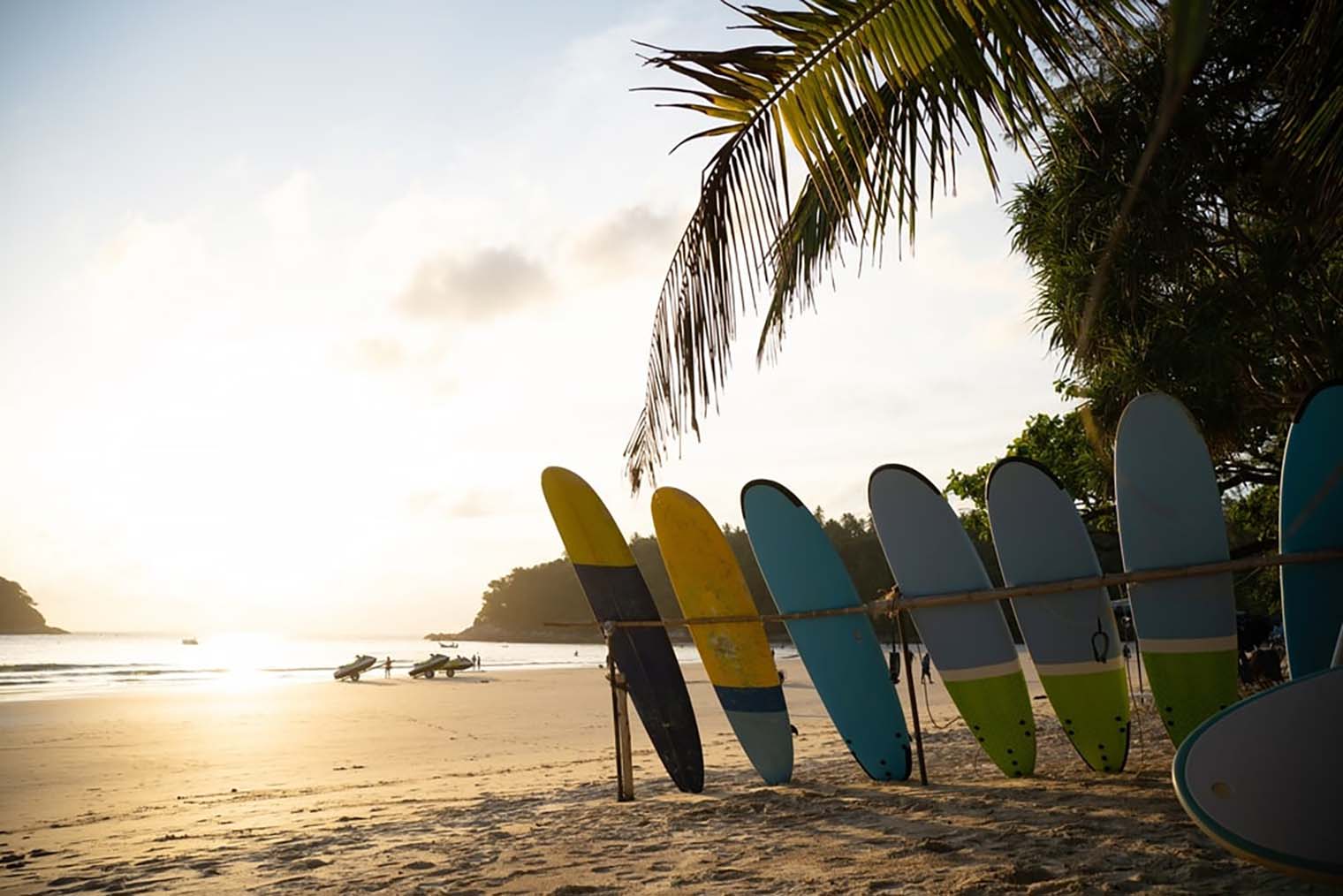
Imagine the joy of catching your first wave, but there’s only one obstacle in your way: Which surfboard should I choose?
A correct board is everything for a beginner. And if you are really passionate about picking up the skill quickly and safely, a long surfboard might be the one that helps you the most in the sea.
So, we would check out the long surfboard, deciding on the right one for a beginner and what the features are, too.

Maui surf lessons, Kihei
Join our Beginner Surf Lessons at Kalama Park, Kihei and learn to surf in a safe, fun, and supportive environment. Perfect for first-timers!
🕑 Duration: two (2) hours | From: $99
✨ Included: Surfboard, leash, rashguard, booties
✔️ Free cancellation: up to 24 hours
Reserve Your Surf Lesson Now →What Is a Longboard Surfboard?
A longboard is generally a surfboard that measures 8 to 10 feet or longer. It features a rounded nose, a wide body, and has more volume when compared to shortboards.
Key Characteristics:
- Length: Usually 8’ to 10’+
- Width: Around 22”–24”
- Thickness: Made thicker for more buoyancy
- Shape: Rounded nose for glide and stability
Shortboard vs. Longboard for Beginners: What’s the Better Choice?
If you’re just starting out in surfing, one of your first decisions will probably be whether to choose a longboard or a shortboard. Although shortboards are often used by advanced surfers for sharp turns and maneuvers, they are not ideal for beginners. Longboards are, however, made to provide a smoother and more stable learning experience.
With a longer length, wider surface area, more volume, and greater buoyancy, they become easier to paddle, easier to balance, and much better at catching small, slow waves. The problem with beginners is that they often want to use shortboards, but the latter require precise timing, stronger paddling power, and excellent balance. Longboards, on the other hand, are more forgiving, and you can work on pop-ups, positioning, and footwork without the frustration of constantly wiping out.
For new surfers looking to build confidence and skills quickly, a longboard is by far the better and safer option. It makes the learning curve easier and allows you to have the wave time you need to improve. If your purpose is to learn quickly, enjoy the ride, and feel more in control, choose the longboard.
Why Longer Surfboards Are Perfect for Beginners
Choosing the right beginner surfboard can be overwhelming, but longboards stand out for several key reasons. Here’s why a longer surfboard is the best choice for new surfers looking to learn faster and surf with confidence:
1. Superior Stability
Longboards offer a wider and thicker shape, which provides excellent balance and flotation. This extra surface area helps beginners:
- Stay upright more easily
- Learn pop-ups with less frustration
- Focus on positioning instead of worrying about falling
2. Easier and Faster Paddling
Longer surfboards have more volume, making paddling less tiring and more efficient. New surfers benefit from:
- Getting out to the waves quicker
- Conserving energy during sessions
- Catching waves earlier with a smoother glide
3. Catch More Waves with Less Effort
Longboards are designed to catch waves earlier and more often—even in small or mushy surf. This gives beginners:
- More ride time per session
- A chance to practice consistently
- Immediate feedback to improve skills
4. Gentle Learning Curve
Compared to shortboards, longboards are more forgiving. They reduce wipeouts and give new surfers the space to:
- Learn proper stance and turning
- Build ocean confidence
- Develop balance and timing step-by-step
Best Types of Longboards for Beginners
When selecting your inaugural longboard surfboard, it is crucial to acknowledge that not all longboards are alike. Various kinds provide different degrees of stability, safety, and performance – each compatible with a beginner’s particular requirements.
Foam longboards, sometimes referred to as soft-top surfboards, are the best choice for complete novices. They are light, very buoyant, and safer in the case of a fall; thus, they are a perfect fit for children and adults who have just started.
If you want a mix of efficiency and ease, a Mini Malibu or “Mini Mal” board, commonly 7’6″ to 8’6″ in length, would be an excellent pick. These boards are a bit shorter than the standard longboards but still deliver good stability with better maneuverability.
A traditional wood or carbon fiber longboard, generally 9 feet or longer, gives the best glide, control, and wave-catching ability, hence the best choice for those dedicated to learning conventional surfing methods. The boards are a little heavier than usual but allow more development over time. Be it small beach breaks or mellow point waves, surfing the right kind of longboard can turn your learning path into a safer, smoother, and a lot more fun one.
Always consider your weight, height, fitness level, and surfing goals before you decide which longboard for beginners suits you the best.
How to Choose the Right Beginner Longboard
Go Longer Than You Think
Pick one at least 2 feet taller than you. For adults, you to keep in the range of 8’0” to 9’6”.
Look for Volume
The more volume you have, the more you can float. Find boards with a lot of liters of volume.
Construction Type
- Soft-top = safer, budget-friendly
- Epoxy = durable, lightweight
- Fiberglass = classic feel, less forgiving
How to Learn Quickly on a Longboard
- Every day, practice how you pop up on the ground.
- Begin in whitewater (the small and broken waves).
- The feet should be at the same level as your shoulder width.
- Keep your eyes where you want to go, not at your feet!
- A fall should not frighten you—learning is the process of falling.
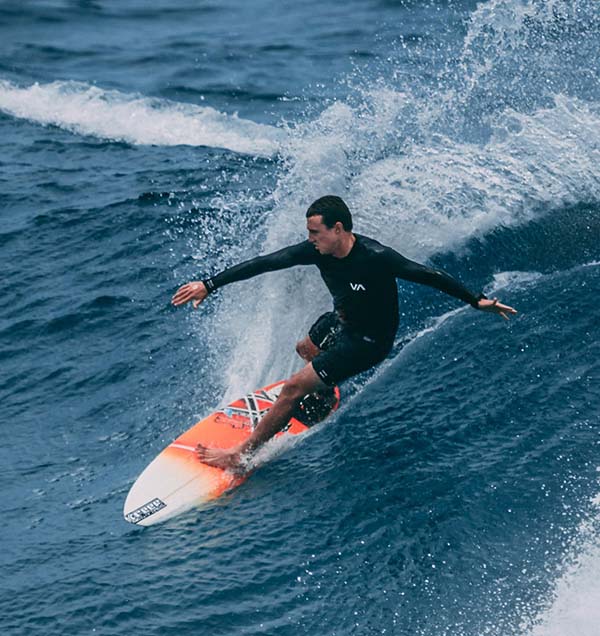
Maui surf lessons, Kihei Hawaii
You’ve read the tips, now it’s time to try them in the water! Our professional instructors will guide you step by step at Kalama Park in Kihei.
🕑 Duration: two (2) hours | From: $99
✨ Included: Surfboard, leash, rashguard, booties
✔️ Free cancellation: up to 24 hours
Book Your Surf Lesson Now →