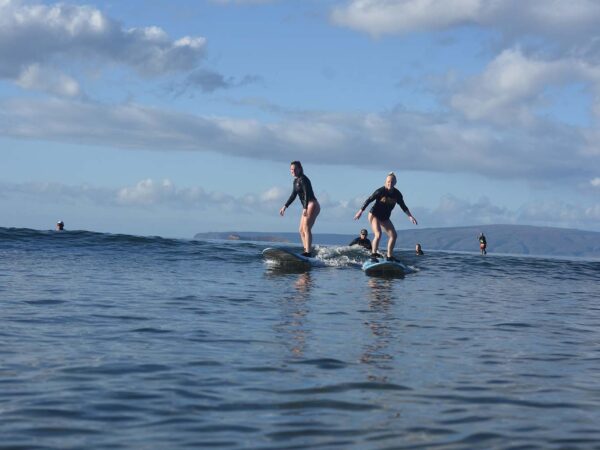



Riding the ocean waves can be a thrilling experience, but starting out with no idea can be daunting. However, you are in the perfect spot and definitely not alone. Surfing at a famous spot like Maui or even at your nearby beach can turn out to be an enjoyable and difficult task at the same time. Here you’ll get a full breakdown of how to start surfing the right way, including the gear you need, safety tips, technique drills, and the best places to catch your first wave. A dive into the water, one step at a time, let’s go!
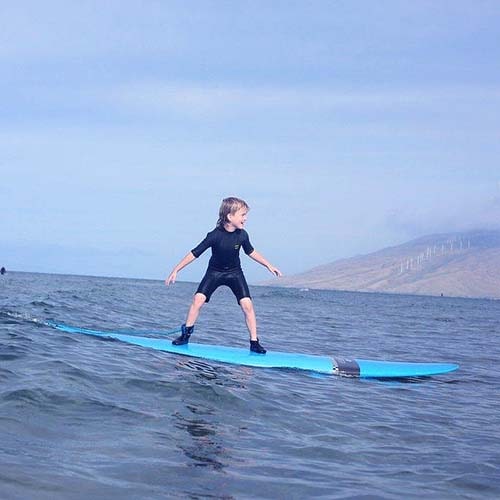
Maui Beginner Surf Lesson, Kihei
Our Surf Lessons are 100% beginner-friendly and a family-safe environment. Certified local instructors with years of experience. Small group size means more personal coaching and faster progress.
Duration: two (2) hours | From: $99
Level: Beginner to Intermediate
Included: Surfboard, leash, rashguard, booties
Book Your Surf Lesson NowWhat Kind of Surfboard Is Best for Beginners?
If you’re a beginner and want to learn surfing quickly, it will be very useful for you to choose the right surfboards. The most basic board that will give you maximum stability and easy paddling should be your first board. In this way, you will feel that you are walking safely even when the waves are small, and you will enjoy the learning process much more. This is why almost all instructors and surf schools suggest starting with a long, wide, soft-top board.
Here is what you should consider for your first surfboard:
- Length: A surfboard length between 8 and 9 feet is ideal for beginners because it is easier to balance on the board with a larger surface area.
- Material: A foam or soft-top surfboard is safer and more forgiving in case of a fall, which is a common situation (and completely normal!) at the beginning of learning surfing.
- Volume: More volume equals better buoyancy, so paddling becomes easier, and getting a wave without tipping over is also possible.
- Shape: Your stability during the pop-up with round noses and wide decks will be better.
When starting out, it’s not necessary to buy expensive equipment. It’s wise to rent a soft-top board, similar to those we use for the beginner lessons, which is an easy way to manage the budget. After that, you can try various figures and designs according to your progress in the sport.
Understanding Surf Conditions and Ocean Safety
Before getting into the water, the first thing you must do is understand the sea. Surfing is not only about the board; it is also about the perfect timing, the right wave, and your safety. For beginners, learning the breaks and selecting the ideal beach conditions will not only make your learning experience better; it will also keep you safe from dangers like the currents or the rocky breaks.
A few simple ocean safety tips for beginners are:
1. Begin with whitewater waves:
These are smaller, broken waves; hence, you can easily practice your balance and pop-up on them.
2. Opt for a sandy-bottom beach:
Do not go to the rocky or reef breaks at first. Sand breaks are safer and more forgiving when you fall.
3. Surf reports:
Always check the surf reports before you decide to go. Use tools such as Surfline or Magicseaweed to review wave height, swell direction, tide times, and wind speed.
4. Learn about tides and currents:
Surfing at low tide or during strong can be more risky and less predictable.
5. Do not go to crowded places:
The more surfers there are in one location, the more the chances of collisions, especially when you are still learning.
Never forget that the ocean is mighty and always changing. Respecting its pulse, being aware of your surroundings, and knowing your limits will help you build confidence and have fun in each session.
How Do You Practice Surfing Techniques Before Getting in the Water?
Practicing the fundamental steps of surfing on land before going into the water is one of the best ways to improve your skills quickly. These basic dryland exercises help you develop muscle memory, improve your balance, and provide you with a strong base for standing on the board when the wave arrives. Even though it might feel a little awkward at first, beach training can significantly raise your confidence and lessen your frustration during your first water sessions.
Recap the steps of the descent and paddling forehand on the dry ground. The surface of the sand is ideal as it is softer and less abrasive in case of falls. You can also use your board and do the face down position movement with your hands on the sand, pretending you are paddling and looking through the nose of the board.
Besides, once you master how to conceive the movement on flat ground, it is the perfect time to put it into the water and progress.
What to do on land before heading out to the sea:
- Pop-Up: Start by pretending to lie face down on a surfboard. Put your hands flat beside your chest, push up, and jump into a low, stable surfing stance with your knees slightly bent and your eyes looking straight ahead.
- Foot Placement and Body Position: Position your front foot roughly at the center of the board and place your back foot closer to the tail. Keep your shoulders relaxed and proceed with your arms extended for balance.
- Control Stance: Practice maintaining your weight evenly distributed and your chest facing sideways—this is very important for staying stable once you are up.
- Balance & Strength Training: Utilize yoga poses such as Tree Pose or Warrior II, or perform simple core exercises like planks and squats to build up your stability.
- Breath Awareness: Focused breathing can ease anxiety and concentrate attention, which is very supportive if you are going to paddle out for the first time.
Even just 10-15 minutes of doing these exercises before going to the water can make your first surf session easier and more successful. It’s all about rehearsing the actions that will be transferred to the ocean.
Paddling Out and Catching Your First Wave: Step-by-Step
First off, if you want to catch the wave that is your first one, you need to… go to the whitewater! This is the place where the waves have just broken. Be a little bit of an expert with the waves and time your paddle so that you start moving with the whitewater. Paddle with full power and determination, definitely don’t stop until you get that push from the wave under your board. This is your point to get up.
In that moment, keep your movements rapid but smooth and concentrate on staying low with your eyes looking ahead. Don’t rush the process or overthink it, even if you fall, every attempt teaches you something new. First time surfing is not solely focusing on the technique part. It’s also about adapting to the ocean’s beat, believing in oneself, and managing to be okay after a fall.
What Are the Most Common Mistakes Beginner Surfers Make?
Surfing progress can be accelerated by avoiding these mistakes:
- Ignoring surf etiquette: Don’t drop in on other surfers or paddle through their line.
- Looking down instead of forward: You will fall where your eyes go—keep your gaze up.
- Feet too close together: This causes instability. Stay wide for balance.
- Trying big waves too early: Start small to build skill and confidence.
- Skipping warm-up or stretching: Cold muscles = more risk of injury.
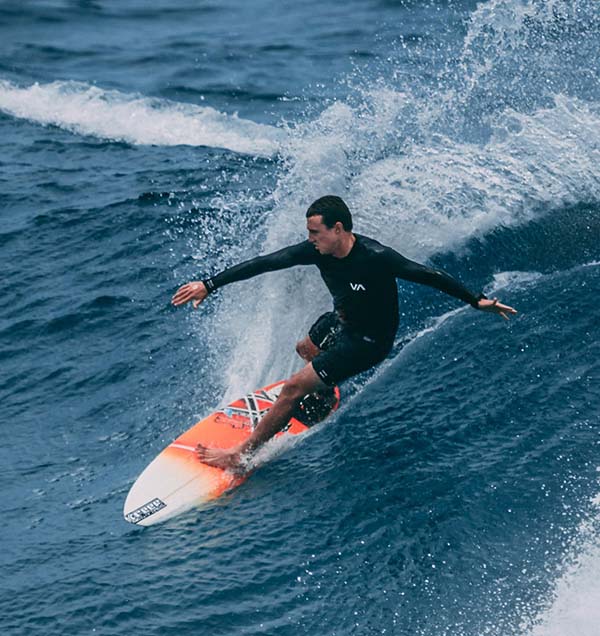
Private Maui surf lessons, Kihei
Our Surf lessons are 100% focused on your surfing style and progress. You can easily fit the lessons into your trip. Our professional instructors will guide you step by step at Kalama Park in Kihei. All equipment provided – just bring swimwear
Duration: two (2) hours | From: $159
Level: Intermediate & advanced surfers
Included: Surfboard, leash, rashguard, booties
Reserve Your Private Surf LessonBest Beginner-Friendly Beaches in Hawaii
If you are surfing in Hawaii, you are in one of the best places in the world to start. The warm water, the steady swell, and the neat beaches that are good for beginners have made the islands the ideal place for new surfers, especially for those in Maui. Here are some of the top spots:
Lahaina Breakwall (Maui)
- Why it is great: This place is great because it is surrounded by a harbor wall, so small and continuous waves are generated, and they are perfect for learning.
- Wave type: Soft whitewater and slow-breaking waves are good for the first time pop-ups.
- Best time: Early morning hours before the trade winds pick up.
- Extra tip: Local surf schools run their businesses right there on the beach, so it is not difficult to be part of a group or have a personal lesson.
Kihei Cove (Maui)
- Why it is great: The beach looks to the south and you will find calm waters and small waves that are very friendly to beginners.
- Wave type: Soft, rolling waves are the most suitable for the soft-top boards.
- Crowd factor: Although it is usually less crowded than Lahaina, it is less crowded on weekdays, mainly.
- Good for: Solo practice, families, and first-time surfers who are scared.
Ukumehame Beach Park (Maui)
- Why it’s great: Locally known as “Thousand Peaks,” the beach offers several surf breaks along the coast.
- Wave type: Long, mellow waves that come in slowly are really suitable for practicing your timing and stance.
- Bonus: You get to enjoy beautiful views of the West Maui Mountains and experience fewer people during the weekdays.
- Tip: Wear reef shoes; the bottom may be a bit rocky in some areas.
Launiupoko Beach Park (Maui)
- Why it’s great: The place is a shallow reef break that produces long, easy waves.
- Wave type: The waves are smooth and slow, just right for beginner longboarding.
- Facilities: There are restrooms, shaded picnic areas, and parking that make it very convenient for full surf days.
- Best for: Families that want to learn together, or any person who is willing to take their time and gain confidence.
Cove Park (Kihei, Maui)
- Why it’s great: Cove Park is a hotspot for surfing lessons in Maui. It is the most preferred place for a number of instructors because the beach has gentle waves, which are perfect for beginners, and also the easy access.
- Wave type: Small, crumbly waves that are perfect for learning the basic skills of surfing.
- Surf schools: There are several surf schools right off the beach where you can rent boards, get rash guards, and take lessons.
- Great for: Newbies who are absolute and want to go through the supported, structured learning.
What Extra Tips Can Help You Learn Faster and Stay Safe?
- Wear reef-safe sunscreen and a rash guard to protect yourself from sunburn and board rash.
- Go surfing early in the morning to get cleaner waves and fewer crowds.
- Take a surf lesson for your first session. It is definitely worth the money.
- Practice stretching before and after your surfing session to prevent cramps or stiffness.
- Keep your patience. Progress might feel slow at the beginning, but it gets quicker over time.