

What is SUP Yoga?
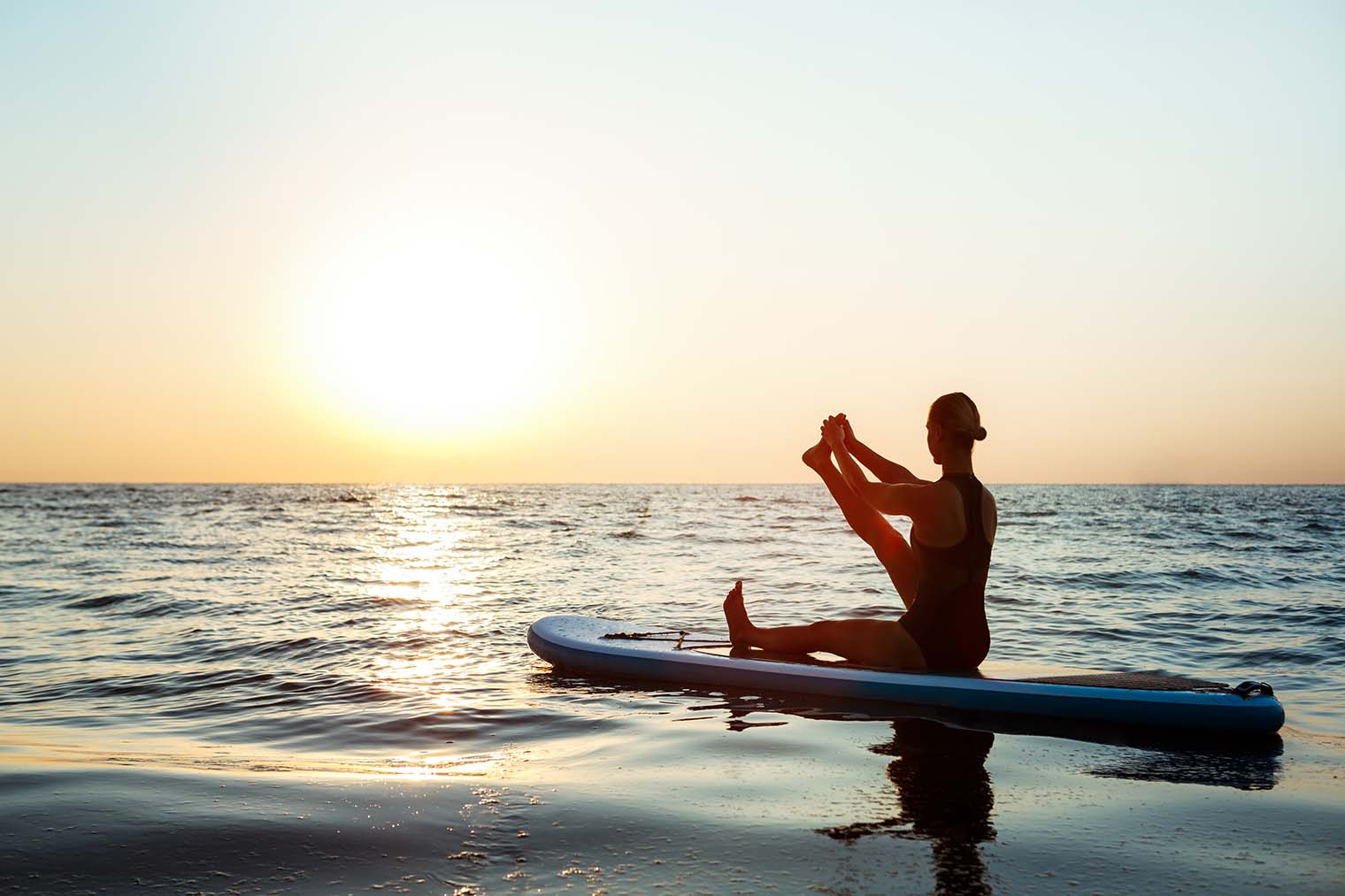
The beauty of Stand-Up Paddleboard Yoga (SUP yoga) lies in its ability to challenge your balance, enhance body awareness, and bring you into complete harmony with nature. Unlike studio yoga, where the ground is stable, SUP yoga requires you to engage your core muscles constantly to stay centered. This adds intensity to even the simplest poses. At the same time, being surrounded by water creates a calming environment that encourages mindfulness.
SUP yoga beauty is that it can, in one go, test your balance skills, improve your body consciousness, and make you feel at one with nature. Compared to yoga in a studio where the floor is steady, with SUP yoga you will have to keep your core muscles active all the time in order to maintain your center. Even the easiest asanas get more strength. Moreover, the water around you is an excellent anti-stress environment which is very suitable for concentration.
SUP Yoga has recently been the talk of the wellness world across the globe, and it is very easy to understand why it is so. The great thing about this discipline is that it combines fitness and meditation with an outdoor adventure, which is a very attractive combination not only for people who regularly practice yoga or are into surfing but also for those who are simply looking for different ways to improve their well-being.
Why Try SUP Yoga? (Benefits You’ll Love)
Yoga on water is not just a matter of being different from others; it still has some scientifically and personally proven benefits. Here are the reasons why thousands of people worldwide are becoming fans of SUP yoga:
1. Enhanced Balance & Stability
Even while standing on a paddleboard, you need concentration and coordination. Introducing yoga poses means that each movement is your chance to challenge your balance. Thus, you engage the small stabilizer muscles in your ankles, knees, hips, and core—muscles that are generally neglected in traditional workouts. With time, this will be reflected in correct body alignment, injury prevention, and strong functional fitness.
2. Core Strength Like Never Before
A SUP yoga session incorporates most of yoga, working various body muscles for constant micro-adjustments. In any pose, whether it is downward dog or warrior, your abs, sides, and back will be engaged. Practitioners of SUP yoga often say that they get their core toned faster than in regular gym workouts.
3. Stress Reduction & Mindfulness
Water, nature, and fresh air make a great yoga combination, and the mindfulness aspect is even stronger than in a regular yoga practice. Research has revealed that practising yoga outside results in an increase of serotonin and a decrease of cortisol (the stress hormone). The voice of the small waves is similar to natural white noise, which assists you in concentrating and letting go of your grip.
4. Greater Flexibility & Body Awareness
As the board is moving slightly under you, you learn to adjust your movements more subtly, thereby recognizing your body’s limits and strengths. This leads to an increase in proprioception (the sense of the position of the body in space), which in turn makes you more elegant and dignified both in the yoga studio and outside of it.
5. Playfulness & Adventure
SUP yoga is different from a studio yoga session, as the latter can sometimes be serious, whereas the former is always fun. You might find yourself wobbling, laughing, or even getting into the water. And that is the great thing about it! Getting into the water is invigorating, and it also helps you to remember that you are not the center of the universe.
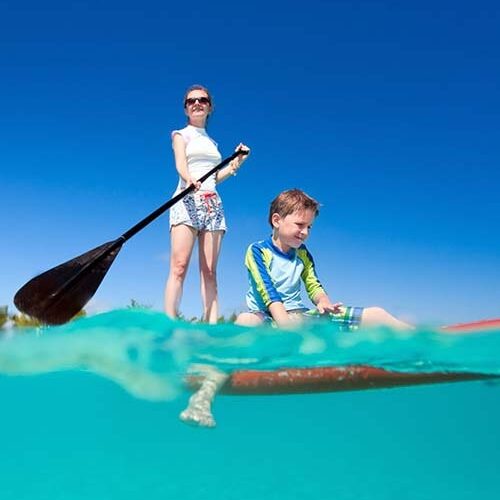
Stand up paddle board Lessons Kalama park
Learn paddleboarding in the gentle waves of Kihei’s Kalama Park. Our friendly instructors make it easy and fun for all ages, from first-timers to families wanting a safe, relaxed start.
🕑 Duration: two (2) hours | From: $109
✨ Included: Surfboard, leash, rashguard, booties
✔️ Free cancellation: up to 24 hours
Reserve Your LessonEssential Gear for SUP Yoga
Stand Up Paddle (SUP) yoga is a great way to relax and enjoy the outdoors without having to lug around a ton of gear. But having the right equipment that is both safe and comfortable always helps to make the experience better.
- Paddleboard: A board that is designed for yoga or general-purpose use is just perfect. Yoga SUPs are wider (32–36 inches) and longer for stability, and most of the times they are provided with a soft deck pad for comfort. Inflatable boards are good for portability, while hard boards give you better stability.
- Paddle:You will use the paddle to reach your place of practice. Most of the people doing yoga put the paddle across the nose of the board, or they secure it under bungee straps.
- Anchor: A necessity if you are out on the water (lakes, bay, or ocean) where a drift can cause you to lose your concentration. A little anchor or sandbag will keep your board steady.
- Clothing: Put on some comfortable and non-restrictive clothes. Swimwear, yoga leggings, or quick-dry activewear are the most commonly used clothes. Heavy fabrics that can weigh you down if you fall in the water should be avoided.
- Safety Gear: leash will make sure that you are close to your board if a drift occurs. In deep or open waters, a light life jacket (PFD) is always suggested, particularly for the newbies.
- Extras: Carry water, reef-safe sunscreen, and if you want to record the moment, a waterproof phone case, maybe, as well.
Certain yoga SUP boards come with built-in handles that are located in the center of the board, so you can position yourself accurately for balance in each pose.
Beginner-Friendly SUP Yoga Poses
If SUP yoga is new to you, then you should begin with small, stable poses that are placed near the board. This not only encourages the feeling of safety but also lessens the fear of falling. Eventually, you will be able to move to the standing postures.
1. Seated Meditation (Easy Pose)
Sit cross-legged right at the center of your board. Shut your eyes, breathe deeply, and listen to the water flow. This pose collects your energy and relaxes your mind for further practice.
2. Tabletop Pose
Get on all fours with your hands directly under your shoulders and knees under your hips. Tighten your abdominal muscles and take your time to find your balance. Following this, you can move into the cat-cow stretches, which are very effective in spinal warm-up.
3. Downward-Facing Dog
Grasp the board with your palms, elevate your hips, and lengthen your spine. The pose on the water makes the small movement between the water and the board even more effective, thus, you get a deep stretch.
4. Child’s Pose
A very grounding posture, child’s pose enables you to rest your forehead on the board, reach your arms out, and take deep breaths. Moreover, it is a safe position if you become unsteady and need support.
5. Savasana (Floating Corpse Pose)
SUP yoga’s most enchanting moment—lying flat on your back with arms and legs loose, floating with the water’s flow. A bunch of people consider this as a very relaxed, almost spiritual floating experience.
Bonus Challenge: After you get the feeling, why not try the warrior poses, tree pose, or headstands for an advanced practice?
Safety Tips for SUP Yoga
Since SUP yoga is done on the water, safety is just as essential as balance:
- Choose the Best Place to Do It: Be in water without waves, such as a bay, lagoon, or lake. Do not go to the sea if it is choppy, the river is fast, or there is a strong wind.
- Definitely Use an Anchor: That will stop you from drifting, especially if you have a group together for the class.
- Weather Check: Even a very light wind can make a person unsteady. Early morning or late evening, when the wind is usually weak, is the best time to go out.
- Become Part of a Group: Doing the exercise with friends or in a guided class is like having help close by if necessary.
- Drink and Protect Your Skin: Have water with you and put on reef-safe sunscreen because the sun’s rays bounce off the water.
- Never forget: a dunk in the water is definitely one of the things you can expect from the experience. Don’t be afraid to have fun and get back on the board!
Best Places to Try SUP Yoga
SUP yoga has become popular all over the world, and you can find courses even in some of the most picturesque places on earth:
- Maui, Hawaii – The crystal-clear waters, the calm bays, and the warm sunshine make Maui a SUP yoga paradise. A lot of local surf schools and yoga retreats provide guided sessions.
- Lake Tahoe, California/Nevada – The view of the snow-capped mountains while doing yoga is amazing, especially at sunrise or sunset.
- Bali, Indonesia – Yoga retreats are the reason why Bali is famous but it also has SUP yoga in the lagoon with the beautiful nature and the coral reefs under your board.
- Florida Keys, USA – The shallow and warm waters make this place a beginner-friendly area for SUP yoga.
- Local Lakes & Reservoirs – No need for a long trip; numerous yoga instructors now offer SUP yoga on lakes and rivers located all over the globe.
In case you’re on a trip, find out “SUP yoga near me” or ask a nearby surf school, as they usually have seasonal classes.
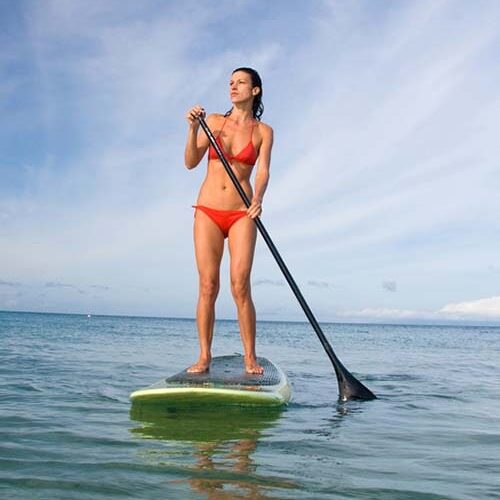
Stand Up Paddle board Tour in Makena Landing
Discover Makena’s calm waters and stunning reef views on a guided SUP adventure. Perfect for families and beginners, spot turtles, enjoy crystal-clear water, and create lasting Maui memories.
🕑 Duration: two (2) hours | From: $169 (Private tour)
✨ Included: Surfboard, leash, rashguard, booties
✔️ Free cancellation: up to 24 hours
Book Makena SUP TourHow to Get Started with SUP Yoga
Feel motivated? Here is an approach that can be followed step-by-step:
1. Learn Paddleboarding Basics First
Prior to the yoga session, consider a stand-up paddleboarding class to learn the skills of balancing, paddling, and the technique of getting back on the board in case you fall.
2. Join a Guided SUP Yoga Class
Find the certified instructors who provide the equipment and guide you through safe, beginner-friendly sequences. Such classes are usually performed in shallow or calm waters.
3. Start with Simple Poses
If you don’t have much confidence, don’t try to do the advanced balances right away; seated meditation, tabletop, or child’s pose would be the right choice. Step up gradually as you get more confident.
4. Use the Right Board
A broader, stable yoga-specific paddleboard designed for yoga makes the process of learning more manageable and more fun.
5. Practice Regularly
As with every other skill, the main secret is consistency. Even working out just once a week can develop your balance, strength, and confidence.
Anyhow, the main aim is not getting perfect, but being there. SUP yoga is simply a fun experience along the way, rather than mastering the poses instantly.
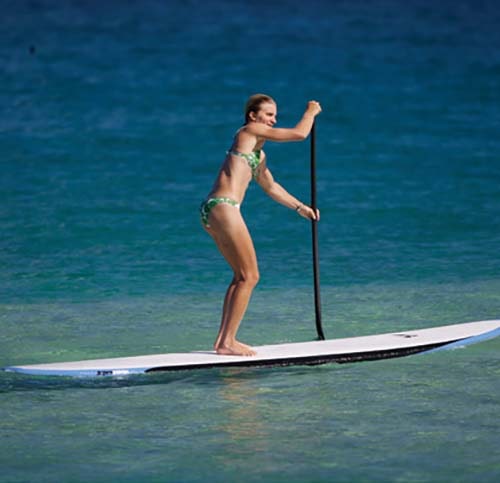
Private SUP Tour Makena landing
Glide over turquoise waters at Makena Landing, explore coral reefs, and spot sea turtles on this peaceful guided SUP adventure.
🕑 Duration: two (2) hours | From: $169 / Private Student
✨ Included: Surfboard, leash, rashguard, booties
✔️ Free cancellation: up to 24 hours
Book your SUP Tour